
"Don't Stop the Lead": Trump Postpones AI Executive Order Over Competitiveness Concerns
NEWSOTHER NEWS
5/22/20262 min read
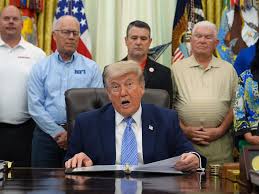
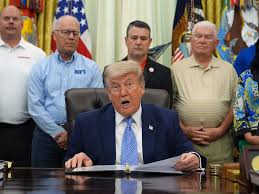
WASHINGTON — In a sudden shift that underscores the growing tension between national security guardrails and rapid technological innovation, President Donald Trump has postponed the signing of a highly anticipated executive order on artificial intelligence.
The signing ceremony, originally scheduled for Thursday afternoon in the Oval Office, was called off just hours before it was set to take place. Addressing reporters at an unrelated event, Trump expressed concerns that the proposed regulations could hamper the United States' competitive advantage in the global AI race.
"We’re leading China, we’re leading everybody, and I don’t want to do anything that’s going to get in the way of that lead," Trump said, adding that he decided to delay the action "because I didn’t like certain aspects of it."
The Push for Pre-Release Safety Reviews
The shelved executive order represented a notable pivot for an administration that has otherwise championed aggressive deregulation. According to draft details and sources familiar with the matter, the order would have established a framework for vetting state-of-the-art AI systems before they are released to the general public.
Under the proposed policy, developers of advanced "frontier" AI models would have been encouraged—or in some cases required—to share their models with federal officials. This voluntary testing framework, modeled loosely on the United Kingdom's AI Safety Institute approach, aimed to distribute the responsibility of verifying safety benchmarks across multiple civilian and national security agencies.
Additionally, the order was expected to task federal agencies with utilizing AI models to defend government networks and identify critical infrastructure vulnerabilities.
The policy had been briefed to executives at major AI firms, including OpenAI, Google, and Anthropic. However, the prospect of a government-mandated review process sparked intense lobbying and pushback from tech allies who argued that even voluntary pre-release vetting could act as a "blocker" to deployment speed.
Cybersecurity Fears vs. Market Agility
The administration's sudden interest in AI guardrails was driven primarily by urgent security warnings. In April, Treasury Secretary Scott Bessent and Federal Reserve Chair Jerome Powell convened an emergency meeting with Wall Street CEOs to discuss systemic cyber risks.
At the center of that meeting were concerns over the capabilities of advanced models, such as Anthropic’s Claude Mythos, which cybersecurity experts warned could be exploited to find and exploit code vulnerabilities in major banking software. Secretary Bessent later publicly acknowledged the meeting, stating that the government wanted to ensure banks were adopting best practices to handle increasingly powerful AI systems.
While national security officials and financial regulators argued that pre-release vetting was necessary to prevent catastrophic cyber incidents, industry libertarians and nationalist tech advocates countered that such rules would only burden American developers. They argued that imposing regulatory hurdles on domestic firms would cede crucial ground to state-backed competitors in Beijing, who face no such domestic restrictions.
A Strategy in Flux
The postponement leaves federal AI policy in a state of uncertainty. Prior to this draft order, the administration had focused its AI strategy on preempting local intervention, including preparing executive orders designed to block state-level safety regulations.
By pulling back on federal vetting, the White House has signaled that, for now, geopolitical competition and market speed remain the administration’s primary objectives.
"The fundamental debate inside Washington right now is whether AI is a weapon that needs to be secured, or an engine that needs to be unleashed," said one policy analyst. "For today, the engines won."
The White House has referred questions regarding the timeline for a rescheduled order back to the President's public remarks, leaving it unclear when—or if—a revised version of the directive will resurface.