
Supreme Court appears inclined to prevent Trump from firing Fed governor
NEWSOTHER NEWS
1/21/20263 min read
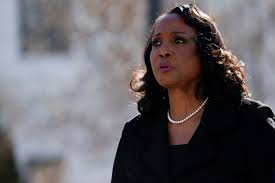
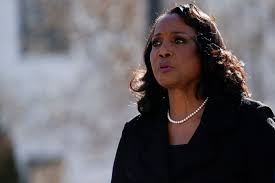
Supreme Court Signals Defense of Fed Independence in Lisa Cook Firing Case
WASHINGTON D.C. — In a landmark session on Wednesday, January 21, 2026, a majority of the Supreme Court justices appeared deeply skeptical of the administration’s attempt to fire Federal Reserve Governor Lisa Cook. The case, Trump v. Cook, has become a pivotal test of executive power over the nation’s central bank, an institution that has traditionally operated with a high degree of political autonomy.
The Core Dispute
The legal battle began in August 2025 when the President attempted to remove Lisa Cook from the Federal Reserve Board of Governors. The administration cited alleged "mortgage fraud" related to discrepancies in loan applications filed in 2021—before her appointment—as "for cause" justification for her removal.
Cook, the first woman of color to serve on the Fed board, sued to block the firing. She argued that the allegations were a pretext used to punish her for the Fed's refusal to lower interest rates as aggressively as the White House demanded.
Skepticism on the Bench
During nearly two hours of oral arguments, justices from across the ideological spectrum questioned Solicitor General D. John Sauer on the administration’s claim that the President has the unreviewable authority to determine what constitutes "cause."
1. The "Shattered Independence" Warning
Justice Brett Kavanaugh offered some of the most pointed criticism, suggesting that the administration's position could "weaken, if not shatter, the independence of the Federal Reserve." He warned that if a president could fire a governor based on "trivial or inconsequential" allegations without judicial review, it would invite a "search-and-destroy" culture every time a new administration took office.
2. Lack of Due Process
Justice Amy Coney Barrett and Justice Ketanji Brown Jackson focused on the lack of a formal hearing. Justice Barrett asked why the White House wouldn't provide a basic hearing to allow a governor to defend themselves, noting that such a step would reduce "irreparable harm" to the institution's credibility.
3. The Definition of "Cause"
The Federal Reserve Act of 1913 states that governors can be removed "for cause," but it does not define the term. Chief Justice John Roberts referred to the allegations against Cook as an "inadvertent mistake" rather than the "malfeasance" or "neglect of duty" typically required to remove independent regulators.
Broader Context: The Battle for the Fed
The hearing took place against a backdrop of escalating tension between the White House and the Federal Reserve:
Jerome Powell Under Fire: Fed Chair Jerome Powell, who attended the arguments, is currently facing a separate Justice Department investigation into office renovations—an inquiry he has characterized as political retaliation.
Monetary Policy: The President has repeatedly criticized the Fed for its "slow" pace of interest rate cuts throughout late 2025, arguing that higher rates are hampering his economic agenda.
Precedent: While the Court has recently allowed the President to fire heads of other independent agencies (like the NLRB and CPSC), the justices suggested on Wednesday that the Fed is "uniquely structured" and requires higher protections.
Potential Outcomes
Legal experts suggest the Court may take one of two paths:
The Narrow Ruling: The justices could rule that the administration failed to follow "adequate process," effectively keeping Cook on the board while requiring the White House to conduct a formal investigation or hearing.
The Broad Ruling: The Court could issue a definitive statement on Fed independence, explicitly defining "cause" in a way that prevents any president from firing governors over policy disagreements.
Conclusion
While a final decision is expected by early summer 2026, the mood in the courtroom suggested that the Supreme Court is not yet ready to grant the executive branch total control over the Federal Reserve. As Lisa Cook stated following the hearing, the case is ultimately about "whether the Federal Reserve will set key interest rates guided by evidence... or succumb to political pressure."
Key Figures at a Glance
Figure, Role, and Stance/Action
Lisa Cook
Fed Governor
Challenging her removal; denies all fraud allegations.
Jerome Powell
Fed Chair
Attended hearing in support of Fed independence; currently under investigation.
D. John Sauer
Solicitor General
Argued the President has broad discretion to fire for "unfitness."
Brett Kavanaugh
Associate Justice
Expressed concern over "shattering" the Fed's autonomy.
Bill Pulte
FHFA Head
Trump ally who initially raised the mortgage allegations.